

The Menyapa-Lesan Cacao Project (2025-2028) is a pioneering initiative that links sustainable cacao farming with orangutan conservation in East Kalimantan, Borneo. This collaborative effort unites Good Chocolate Hub (Switzerland), BOS Schweiz (Borneo Orangutan Survival Switzerland), and CAN Indonesia (Conservation Action Network) to protect rainforest biodiversity while strengthening local livelihoods.
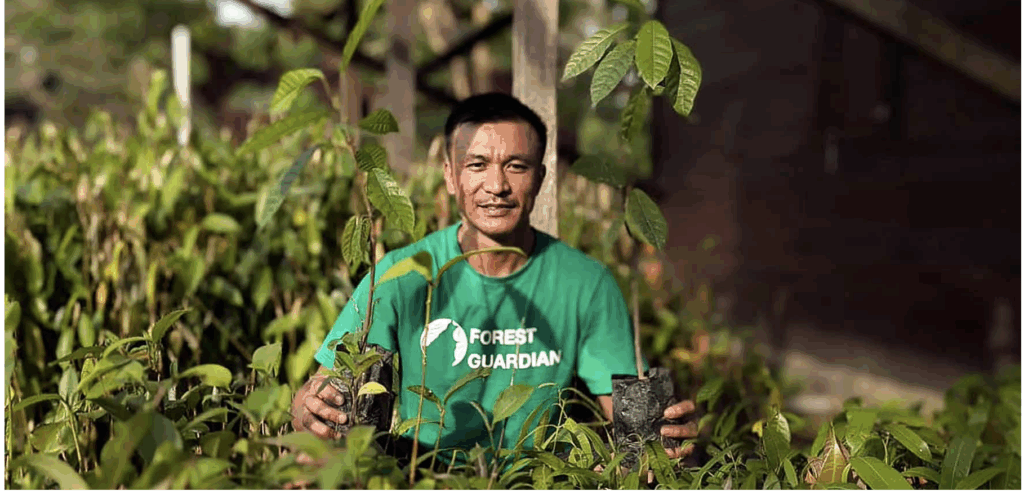
© CAN 2025
Integrated Conservation and Cocoa Initiative in the Menyapa-Lesan Wildlife Corridor
The Menyapa-Lesan Wildlife Corridor project in East Kalimantan, Indonesia (already launched by CAN and BOS Schwitzerland 2024), represents an innovative integration of conservation and sustainable agriculture. Spanning 193,000 hectares, the corridor connects two vital forest landscapes, the Wehea-Kelay and Sangkulirang-Mangkalihat, critical habitats for the endangered Bornean orangutan and other species. The project addresses pressing threats such as deforestation, habitat fragmentation, and economic pressures on local communities, aiming to establish a harmonious balance between environmental protection and socio-economic development.
At the heart of this initiative lies the innovative Menyapa-Lesan Cacao Project, which enhances the conservation efforts by promoting sustainable cocoa farming as a non-timber forest product. This integration demonstrates how economic incentives can align with environmental stewardship, fostering long-term habitat protection while improving the livelihoods of local communities.
Conservation Objectives and Synergies
The Menyapa-Lesan Cacao Project complements these efforts by addressing the socio-economic challenges faced by the six indigenous Dayak villages within the corridor. By providing an alternative to environmentally harmful industries such as palm oil and coal mining, sustainable cocoa production offers a viable pathway to economic resilience. This approach not only reduces the pressure on forests but also creates a direct link between conservation and local prosperity.
Sustainable Cacao Production
The cocoa initiative focuses on improving cultivation practices, enhancing post-harvest processing, and establishing a transparent supply chain for high-quality cocoa. Participatory and gender-sensitive training equips farmers with the skills needed for Climate Smart Agriculture (CSA), Good Agricultural Practices (GAP) and Good Manufacturing Practices (GMP) for smallholders. The project aims to enhance both the quality and quantity of locally produced cacao while safeguarding the environment. It will bolster regional orangutan conservation efforts and position sustainable cacao as a flagship agricultural product with national and international recognition.
Economic and Environmental Innovation
The integrated approach highlights several innovative elements:
- Economic Incentives for Conservation: Sustainable cacao farming provides direct financial benefits to communities while reducing deforestation and habitat degradation.
- Community Empowerment: Local farmers, including women through the Local Champion Program, are empowered as stewards of the environment, fostering a sense of ownership and sustainability.
- Alternative Income Support: Diversified agricultural products, ecotourism, and entrepreneurial ventures complement cocoa production, enhancing resilience against market fluctuations.
- True Cost Accounting: By incorporating environmental and social costs into cacao pricing, the project ensures fair remuneration and promotes sustainable practices.
A Holistic Vision for Sustainability
By integrating sustainable agriculture into a conservation framework, the Menyapa-Lesan project creates a replicable model for balancing ecological preservation with human development. The corridor serves as a lifeline for approximately 185 orangutans, while also supporting over 525 farming families across six villages.
Through collaboration with stakeholders, including local governments, indigenous groups, and private companies, the project embodies a holistic approach to conservation. Together, the Menyapa-Lesan Wildlife Corridor and Cocoa Project demonstrate that economic development and environmental stewardship can be mutually reinforcing, paving the way for a sustainable future in East Kalimantan.
This project was possible thanks to a grant from the SWISSCO Innovation Programme, which is supported by the Swiss State Secretariat for Economic Affairs SECO.