

First project trip: Menyapa Lesan Cacao Initiative, East Borneo
At the beginning of June, we went on a project trip to Indonesia to visit the Menyapa Lesan Cacao Initiative in East Borneo and our local project partners. Our journey took us first to Bali, then on via Jakarta to Borneo.
As part of this project, we are working to combine sustainable cocoa farming with the protection of the rainforest and orangutans – whilst at the same time strengthening the livelihoods of indigenous Dayak communities. What we experienced on this trip was intense, moving and full of new impressions: inspiring conversations with cocoa farmers, close encounters with project partners and memorable moments that will linger in our minds for a long time to come.
The trip not only showed us how much has already been achieved, but also how much potential there is in working together. It was full of encounters, new perspectives and questions that will continue to stay with us.
It took us a little while to process everything we’d experienced, so we’re all the more delighted to now take you along on a look back at this special journey. Ready?
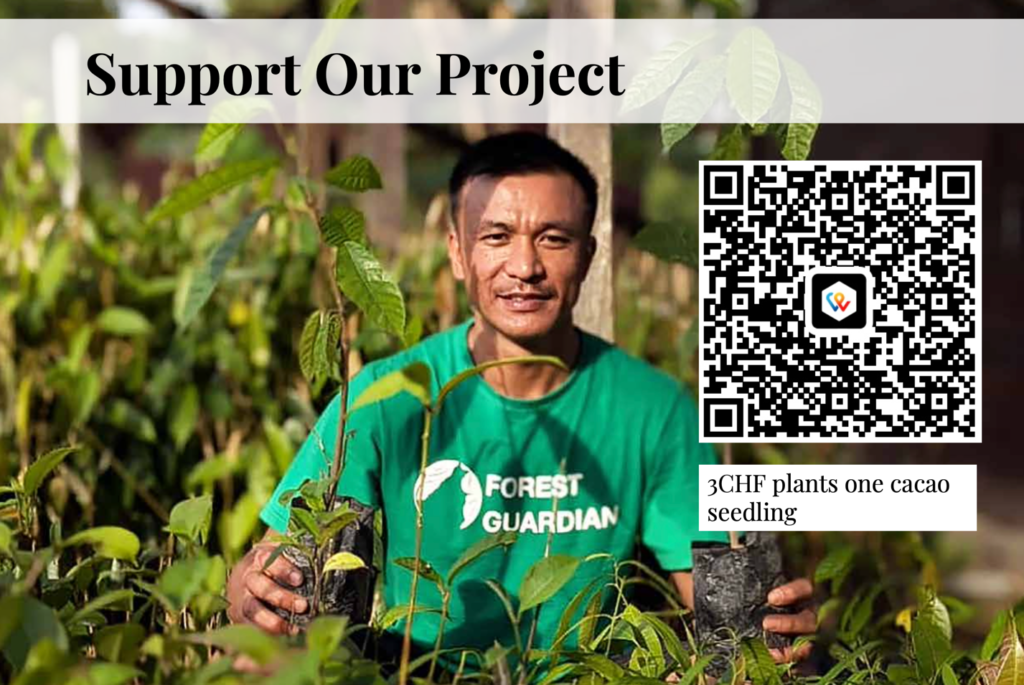
Would you like to contribute to our project? If so, you can support the work on the ground directly by donating one or more cocoa seedlings.
This project was made possible thanks to a grant from the innovation programme of the Swiss Platform for Sustainable Cocoa (SWISSCO), which is supported by the State Secretariat for Economic Affairs (SECO).
Further information on the project is also available on the Kakaoplattform project page.
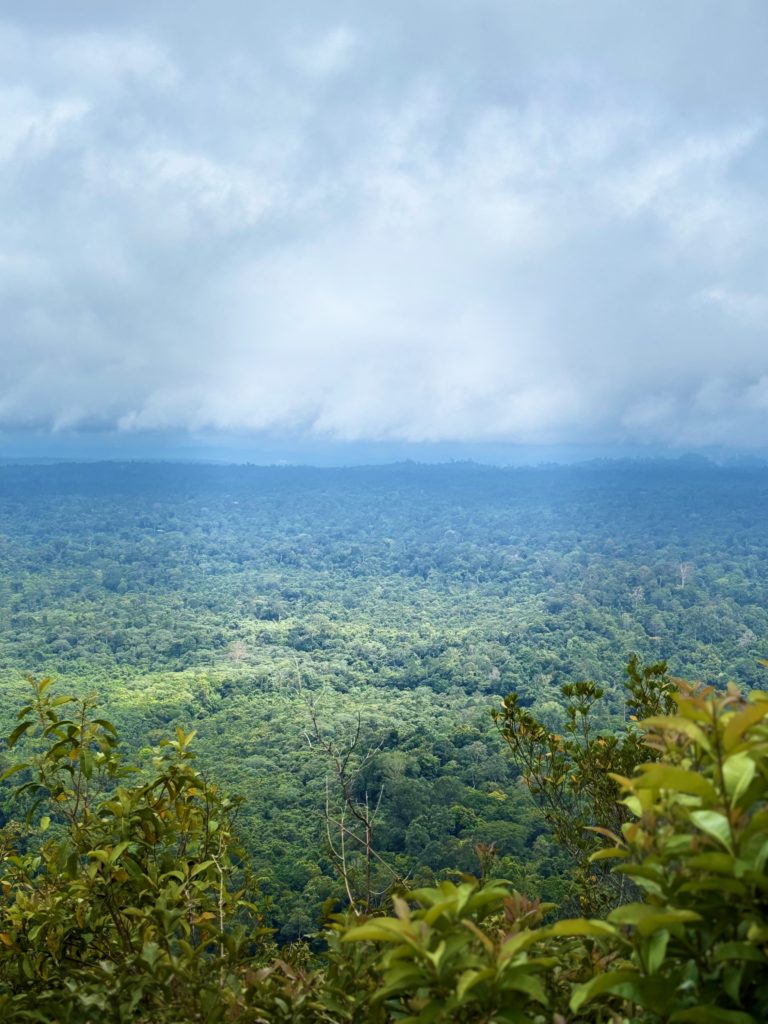
Bali
For many people, Bali is known primarily as a dream holiday destination. What is less well known, however, is that cocoa is also grown on the island – particularly in western Bali.
At Denpasar Airport, we were met by Tya, our project manager at the Menyapa Lesan Cacao Initiative. It was Andrea’s first trip to Indonesia, which made our arrival all the more exciting. For Evelyn, it was a joyful reunion – she had previously worked in the cocoa sector in Bali and has known Tya ever since.
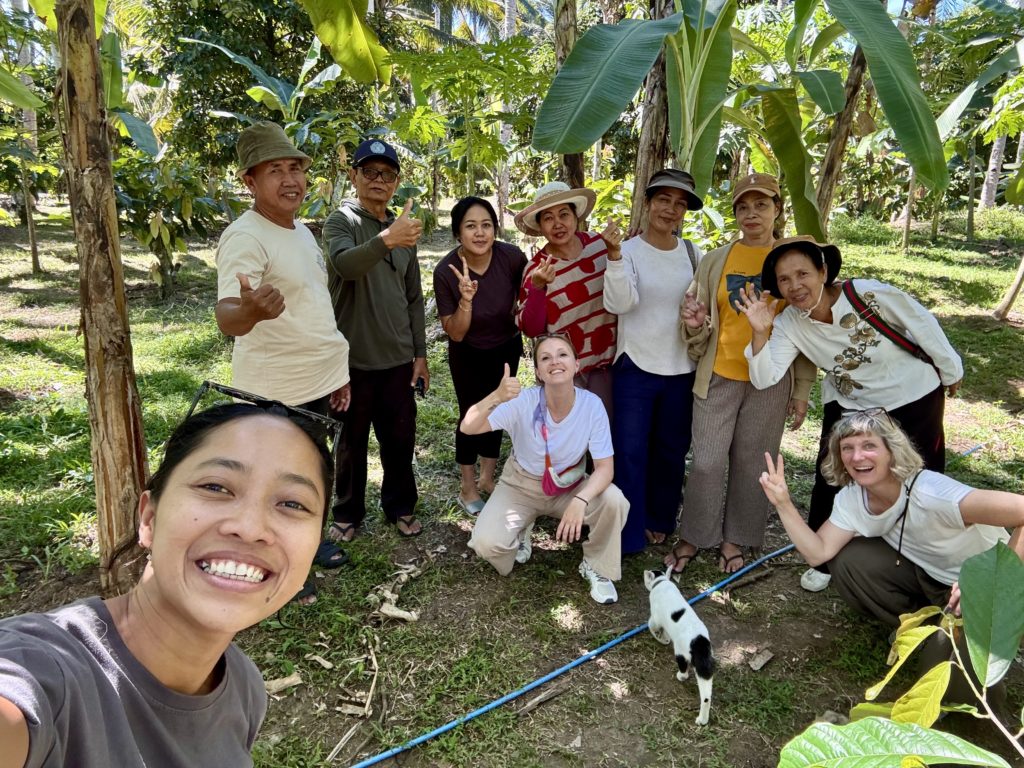
A short day to settle in, then we’ll be off to visit cocoa farms and meet Bibik, Guru and other farmers whom Tya and Evelyn have known for some time. They told us how they’ve organised themselves into a farmers’ group and how they sell their cocoa to CAU Chocolate, for example – the only chocolate manufacturer in Bali run by Balinese people.
We were also able to visit CAU Chocolate itself, as well as a small, brand-new chocolate factory, which immediately impressed us with its ideas and vision. It is always inspiring to see the care, creativity and dedication that go into creating value on the ground.
Of course, the project trip wasn’t just marked by exciting encounters, but also by deadlines. Between walks on the beach and a little chocolate tasting in the evening, we were still working on finalising and submitting our first project report. We also met the Koltiva team and discussed the implementation of KoltiTrace – a system designed to make supply chains more transparent and traceable.
And before we knew it, it was time to pack our bags for the next stop: Jakarta.
Jakarta & Bandung
On arriving in Indonesia’s capital, Andrea was immediately captivated by this unique form of urbanity – the deep canyons of skyscrapers and the diversity that defines a city like Jakarta. We were also in luck: there were no hours-long traffic jams, so we arrived just in time for lunch with the KEM team, the Centered Earth Economy Coalition. KEM’s vision is for Indonesia’s value chains to be shaped by sustainable businesses that make a significant contribution to environmental protection.
At a restaurant that reinterprets local specialities from various Indonesian islands into beautifully presented dishes, we not only enjoyed an incredibly delicious lunch, but also had an inspiring conversation about possible forms of collaboration and sustainable entrepreneurship within our cocoa project.
That evening, Gita, the chair of the board, took us to a very special place: a warung (small food shop) in South Jakarta, which sources its rice from a social project and actively supports it through this partnership. Here, too, the food was excellent – and the idea behind it made the visit all the more memorable.
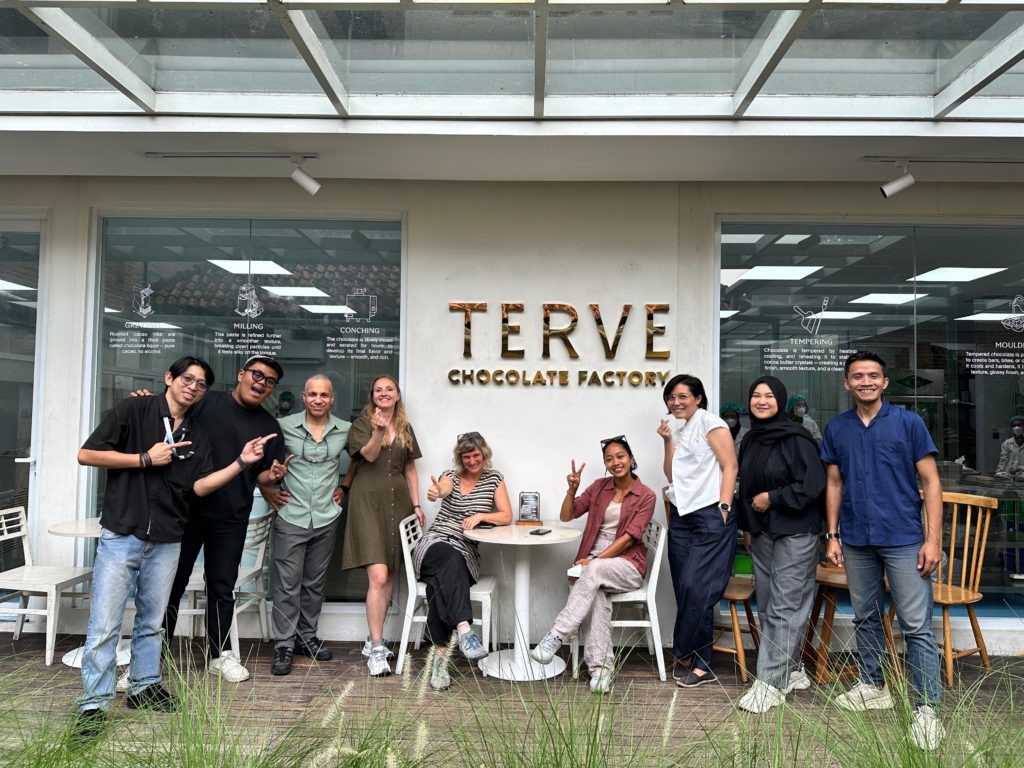
The next day, we took a short trip into the city of Bandung. To get there, we boarded the Whoosh high-speed train – and that’s exactly what it felt like: we literally shot through the countryside at 300 km/h. In Bandung, we visited Terve Chocolate, a bean-to-bar chocolate maker, where we gained an in-depth insight into the chocolate-making process. In their single-origin creations, in the blend of passion and craftsmanship, and in what local value creation can truly mean.
By that point, a week had already passed. We were tired, yes – but the most exciting part of the trip was still ahead of us: East Borneo.
East Borneo
Even as we approach the town of Tanjung Redeb, it becomes clear just how vast and impressive one of the world’s most biodiverse rainforests is – and, at the same time, how much pressure it is already under due to changes in land use. From the aeroplane, we can see not only the landscape but also the traces left behind by humans. Evelyn strikes up a conversation with the person sitting next to her, who works in the timber industry. The region is closely linked to economic interests centred on timber, coal and palm oil. The flight is full of people who work in these sectors.
At the airport, we are met by Linus, the head of our local project partner, the NGO Conservation Action Network (CAN), along with Bayu and Petz. CAN is committed to protecting nature and working with local communities, and, amongst other things, runs an animal rescue centre.
From there, we continue our journey by car for around two and a half hours to the village of Merasa, where CAN also has a base. There, we meet the cocoa team: Susi, Donan and Resto, three young, dedicated people who have already done important work on the project over the past few months. Their work on the ground is crucial, as CAN has close ties with the local communities and maintains a direct presence there.It is precisely this closeness, this trust and this ongoing collaboration that are essential for a project like this.
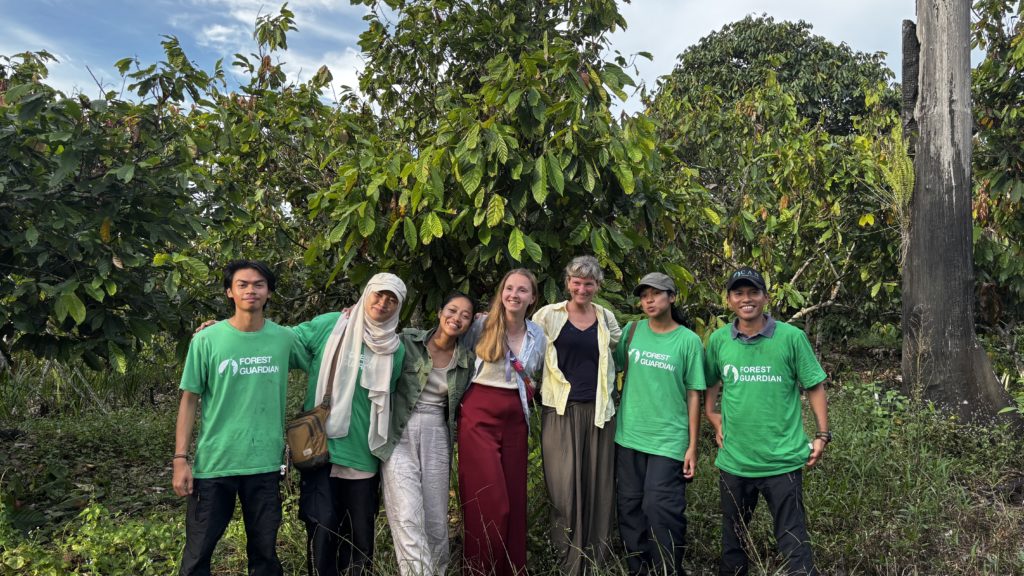
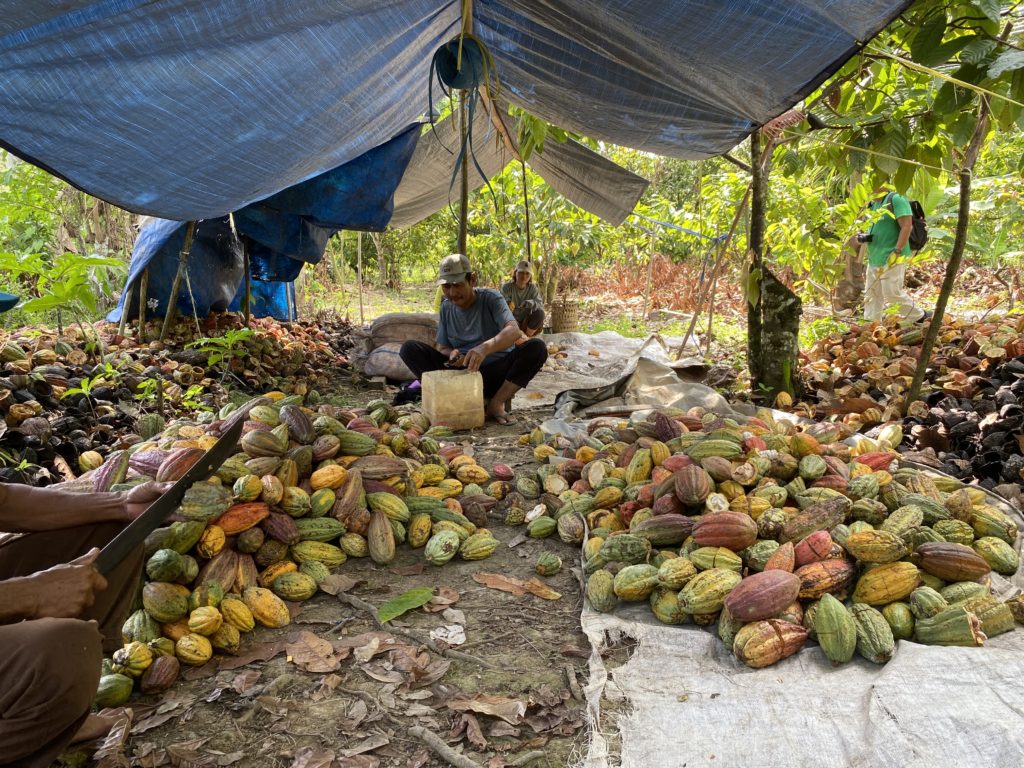
In Merasa, we visit cocoa farmers who are in the process of opening the cocoa pods after the harvest. We see the newly built cocoa seedling nursery and the fermentation facility, which is already in operation in the village. The visit to the cocoa farmers who have already set up a small chocolate business is also particularly impressive: In their home, using two small melangers, they make various types of chocolate from their own fermented and dried cocoa beans, which they sell locally and at nearby markets.
Of course, we’ve also brought some chocolate with us: the first test batch of chocolate made from beans grown in this village, which our project partner Kürzi Kakao received a few months ago and used to produce the first batch of chocolate. A 70 per cent bar and a rather sweet cashew chocolate. The farmers prefer the sweeter version, whilst the CAN team finds it almost a bit too sweet – but the test has also shown what is already possible and where there is still room for improvement. The fermentation isn’t quite perfect yet and produces certain off-flavours, but at the same time there are fruity aromas that show great promise. And this is precisely what we can and should continue to work on as part of our project.
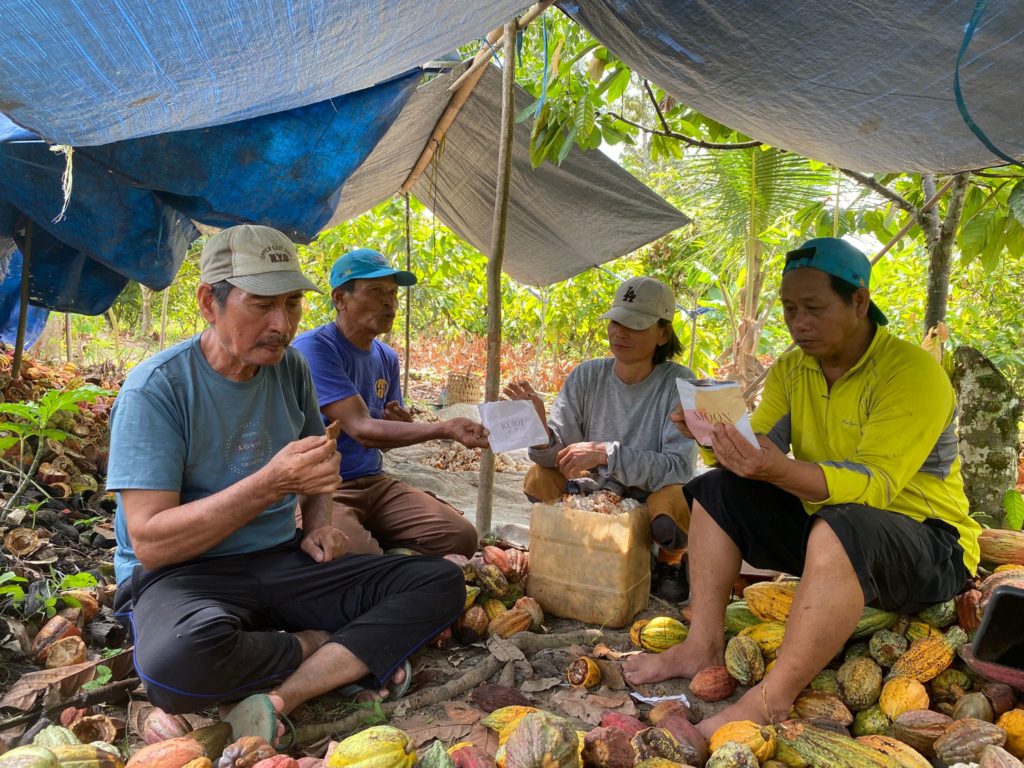
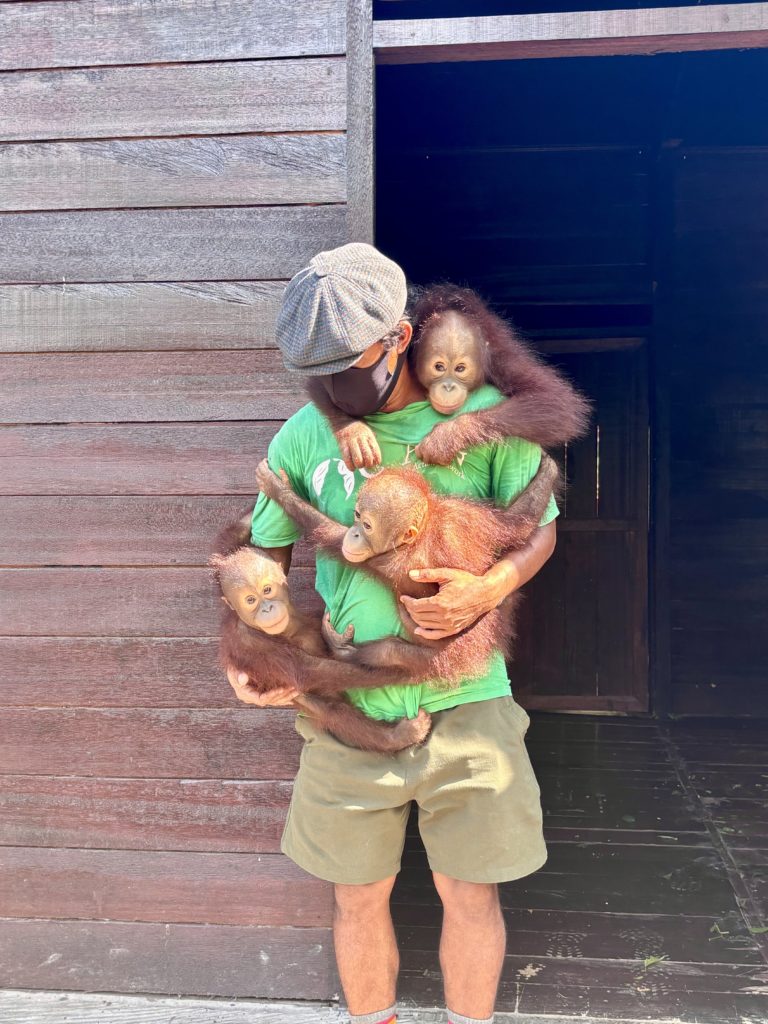
Another particularly memorable part of the day was our visit to the Animal Rescue Centre in Merasa. There, we were met by the gaze of gibbons, sun bears and three baby orangutans — a moment that will stay with us for a long time to come. They will be cared for there for at least seven years before they can one day be released back into the wild. This shows just how great a responsibility CAN bears as an organisation. It was all the more moving for us to see the passion, care and dedication with which the staff look after the animals.
Back to cocoa: A total of eight villages in this region are part of the project, and each has its own unique starting point. Whilst a fair amount of cocoa is already being grown and fermented in Merasa, other villages currently have only small cocoa plantations. In Sidobangen, no cocoa is yet being grown, but the village community is ready and keen to get started.That is precisely why the planned cocoa demonstration plot will be set up there – a place where farmers can learn how to grow and properly care for cocoa seedlings.
Over the following days, we visit four more villages: Muara Lesan, Lesan Dayak, Sidobangen and Merabu. There, we speak with the village leaders, visit cocoa farms and meet cocoa farmers to discuss the project, our shared commitment and the opportunities in cocoa cultivation. We want to understand what people would like to see in terms of cocoa farming, but also what challenges they see and what is needed to ensure that cocoa can play a greater role in the long term.
It is clear that long-term strategies are needed to strengthen cocoa as a reliable source of income, to ensure stable prices, sustainable supply chains and market access, and to establish cocoa within agroforestry systems as a genuine economic incentive, so that farmers can develop a sense of ownership whilst at the same time protecting forests and wildlife.
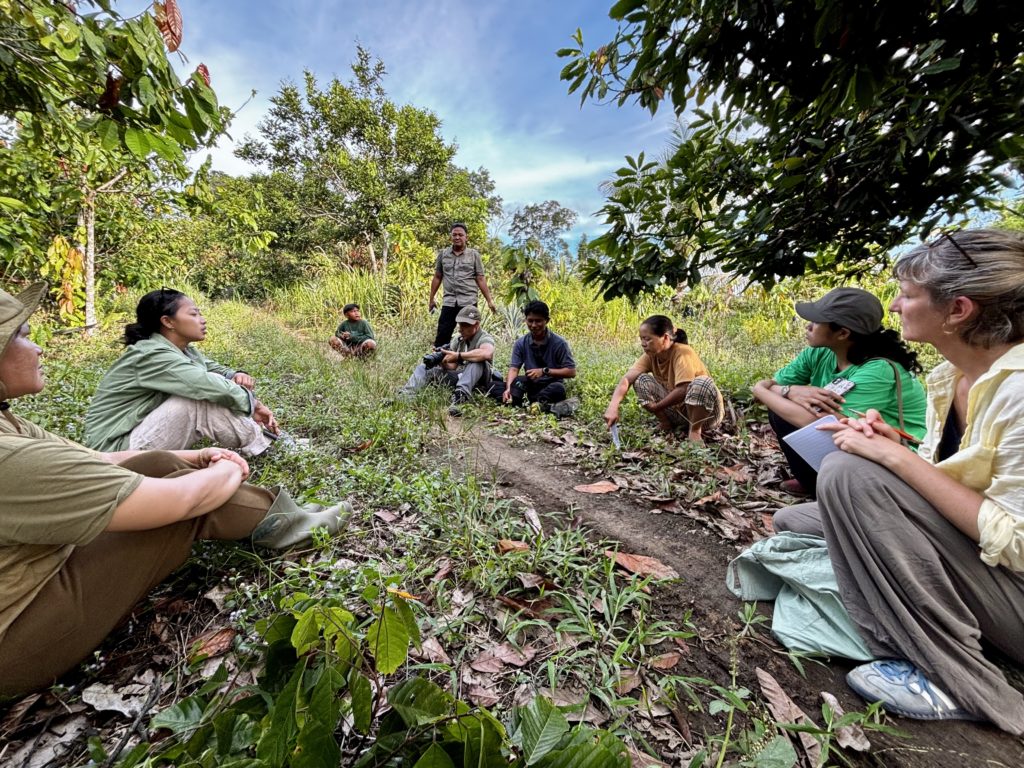
On the final day, we sit down with the CAN team to reflect on the past few days, discuss the next steps and priorities, and refine our joint strategy. Some of the initial ideas are discarded, new approaches emerge, and it becomes clear once again just how much work still lies ahead of us.
We are all the more grateful to be working with such a strong team — alongside CAN, Tya, BOS Switzerland and Kürzi Kakao.
You can get involved in the project! Cocoa seedlings will soon be planted in the project area. Would you like to sponsor some seedlings? 🌱 For 3 CHF, you can plant a cocoa seedling.